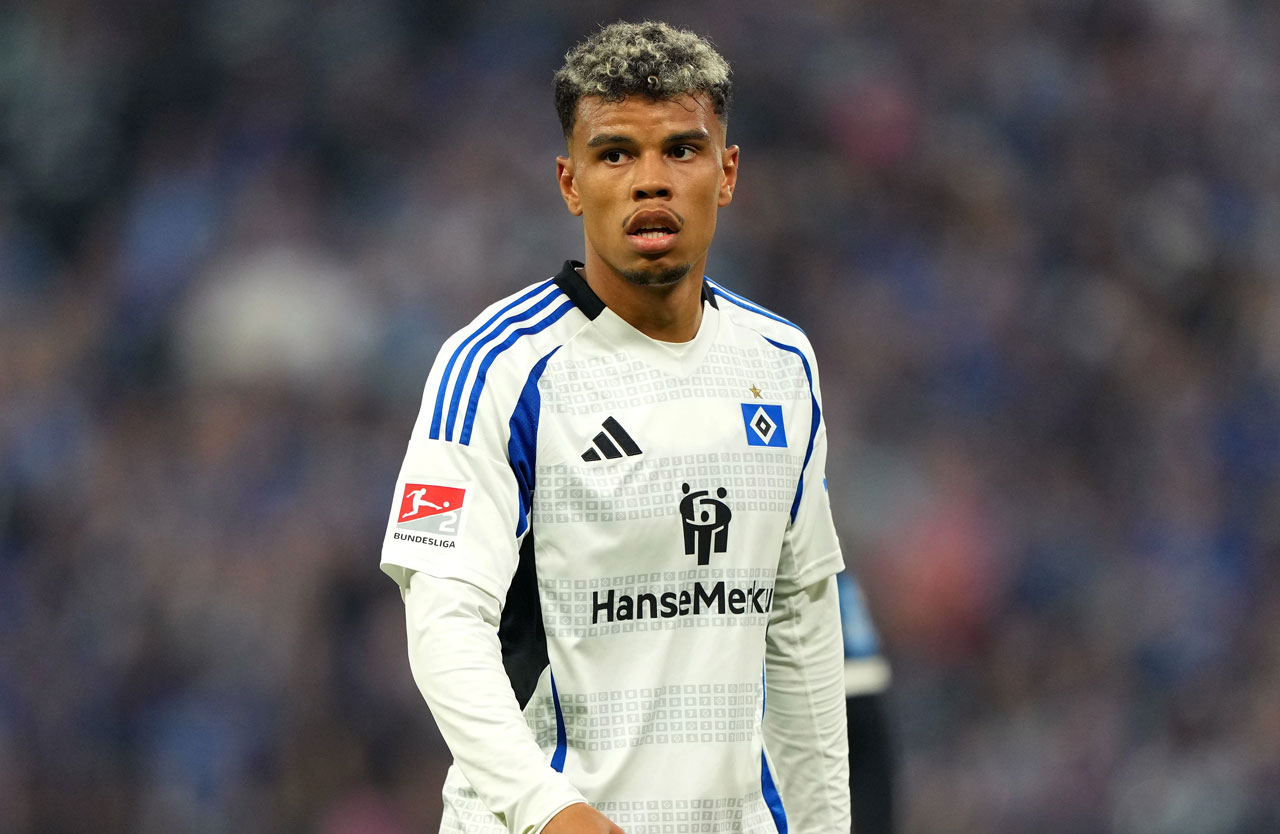
Young dual‑nationals with Ghanaian roots are increasingly shaping conversations in German football, and two names at the heart of that debate are forward Ransford-Yeboah Königsdörffer and emerging talent Raif Adam. Their progress in and around the Bundesliga has become a focal point for discussions about the future of the Black Stars and the strategic courting of Europe‑bred Ghana‑eligible players.
Königsdörffer, who plays his club football in Germany and has already been capped by Ghana, represents a successful example of the Ghana Football Association’s deliberate push to attract dual‑national players raised in top European systems. Having come through the German youth setup before committing to Ghana, he combines the tactical schooling and intensity of German football with a strong desire to establish himself on the international stage for the Black Stars. His versatility across the front line and his ability to press from the front have earned him attention in Bundesliga‑centric coverage, where analysts often highlight him as part of a new wave of athletic, high‑energy Ghanaian attackers.
At the other end of the career spectrum is Raif Adam, a German‑born youngster who has been making moves in the German club scene and has recently signed for SV Elversberg. His switch has been covered as a significant step in his development, placing him in a competitive environment that has become a recognised springboard into higher levels of German football. While Adam is not yet a household name, his trajectory typifies the profile of Ghana‑eligible prospects who could, in the coming years, expand the Black Stars’ talent pool if properly scouted and integrated.
The presence of these players has kept the Ghana‑German football link in the headlines, especially as other Europe‑based Ghanaians such as Kevin‑Prince Boateng and Jérôme Boateng previously highlighted the potential of this pathway. Each new dual‑national story renews debate among fans and pundits about identity, opportunity and competition: should these players fight for a place in football‑rich European national teams, or embrace the chance to become central figures for Ghana? In recent years, the trend has tilted toward the latter, with the Ghana FA investing more energy in outreach, documentation processes and integration camps to make the switch smoother and more attractive.
Within the Bundesliga ecosystem, Königsdörffer and Adam also symbolise broader recruitment patterns, where clubs increasingly scout multicultural urban centres in Germany for technically gifted youngsters with African heritage. Their stories are used in German media as case studies of how clubs and federations compete quietly for allegiance, long before a player becomes a global star. For Ghanaian supporters, every strong performance in German football by these dual‑nationals serves as both a point of pride and a reminder that the future of the Black Stars may be shaped as much in Hamburg, Berlin or the Saarland as in Accra or Kumasi.