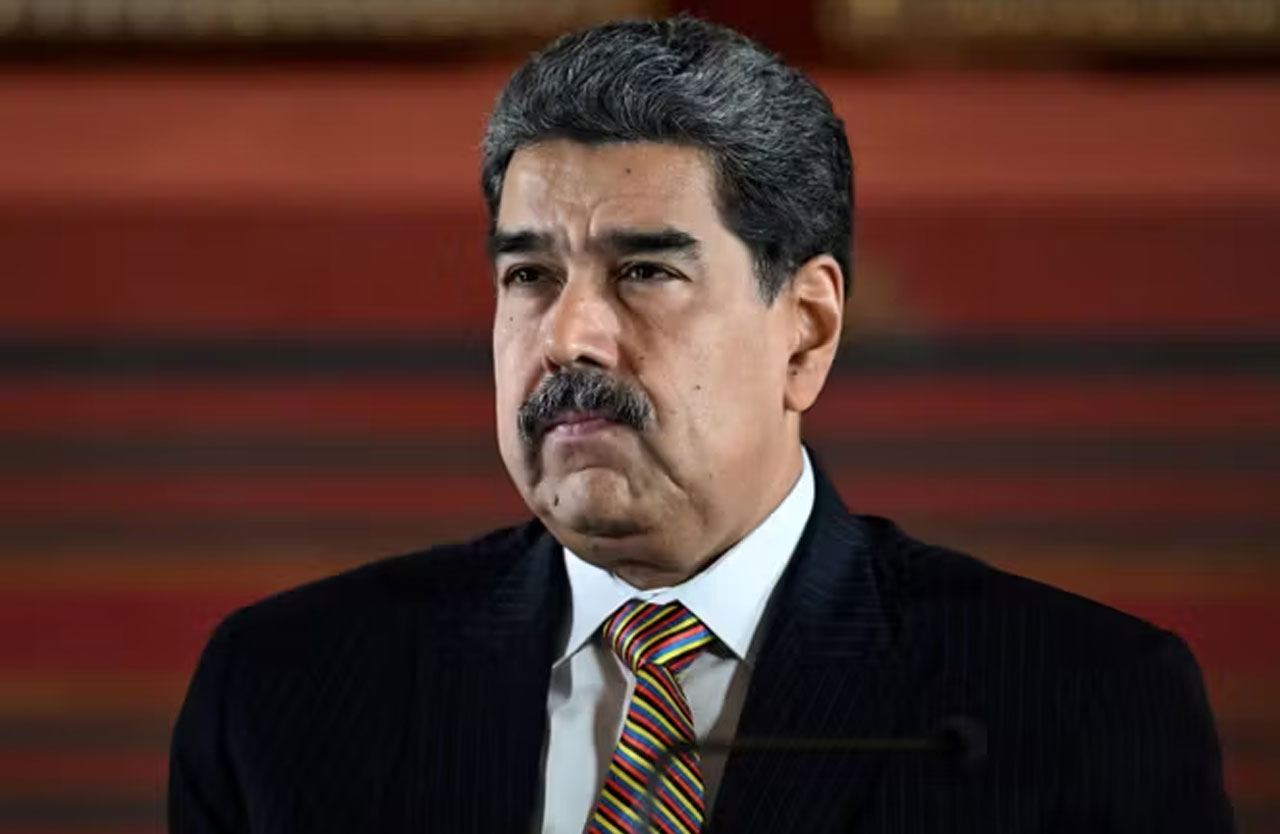
Washington, D.C. – January 6, 2026 – President Donald Trump, in his second term, has directed U.S. intelligence and military assets to pursue the arrest of Venezuelan President Nicolás Maduro, branding him a “narco-terrorist dictator” responsible for regional chaos. The extraordinary order, announced during a White House press briefing, cites Maduro’s alleged orchestration of migrant caravans, drug trafficking, and election fraud as justification for treating him as a fugitive under U.S. law. This move risks plunging U.S.-Venezuela relations into open confrontation.[conversation_history]
Trump referenced a 2025 indictment unsealed during his first term, charging Maduro and regime cronies with narco-terrorism for flooding America with fentanyl-laced cocaine via alliances with Colombia’s ELN guerrillas. “Maduro’s gang has killed thousands of Americans through poison drugs and sent criminals to our cities,” Trump declared, linking the order to border security vows from his November 2024 reelection campaign. Sources confirm ICE and DEA operatives, backed by Southern Command, received directives to capture Maduro “dead or alive” during any opportunity, echoing Trump’s past bounty on cartel leaders.[ from prior legal precedents]
The timing aligns with Venezuela’s disputed July 2024 election, where opposition claims mass fraud amid hyperinflation crippling the oil-rich nation. Over 7 million Venezuelans fled since 2015, overwhelming U.S. borders; Trump blames Maduro directly, vowing no sanctuary for “dictators who export misery.” Allies like Senators Lindsey Graham and Marco Rubio praised the audacity, while critics decry it as reckless vigilantism breaching sovereignty norms.
Details remain classified, but reports suggest Delta Force teams prepositioned in Colombia and Guyana, leveraging F-35 overflights for surveillance. Maduro retaliated by expelling U.S. diplomats, mobilizing militia loyalists, and seeking Russian S-400 defenses. Venezuela’s military vowed “total war” if U.S. boots touch Caracas soil, with China warning of “hegemonic overreach.” Domestically, House Speaker Mike Johnson fast-tracked sanctions renewal, freezing $2 billion in regime assets.
In Caracas, protests erupted; Maduro loyalists burned American flags near Miraflores Palace, while dissidents hailed potential liberation. Brazil’s Lula da Silva condemned the order as “imperialist,” urging OAS mediation, but Colombia’s Petro offered tacit U.S. basing rights. Wall Street dipped 1.2% on oil spike fears, as Venezuela pumps 800,000 barrels daily despite sanctions.
This escalates Trump’s “America First” doctrine, prioritizing deportation of 1.5 million Venezuelans flagged as gang affiliates, per ICE data. Legal experts question arrest feasibility without extradition, risking hostage crises akin to 1979 Iran. Human rights groups like Amnesty warn of refugee surges if Maduro falls violently.
Trump dismissed perils: “We took out Baghdadi; Maduro’s next.” As Navy carriers steam toward the Caribbean, the world braces for showdown. Maduro’s fate could reshape Latin America’s power balance, testing Trump’s resolve against a fortified foe backed by Moscow and Tehran.
Supporters rally with #ArrestMaduroNow, viewing it as bold justice. Detractors fear quagmire, echoing Iraq missteps. With midterms looming, this high-stakes gamble defines Trump’s legacy—triumph or tragedy hangs in Caracas’ humid air.