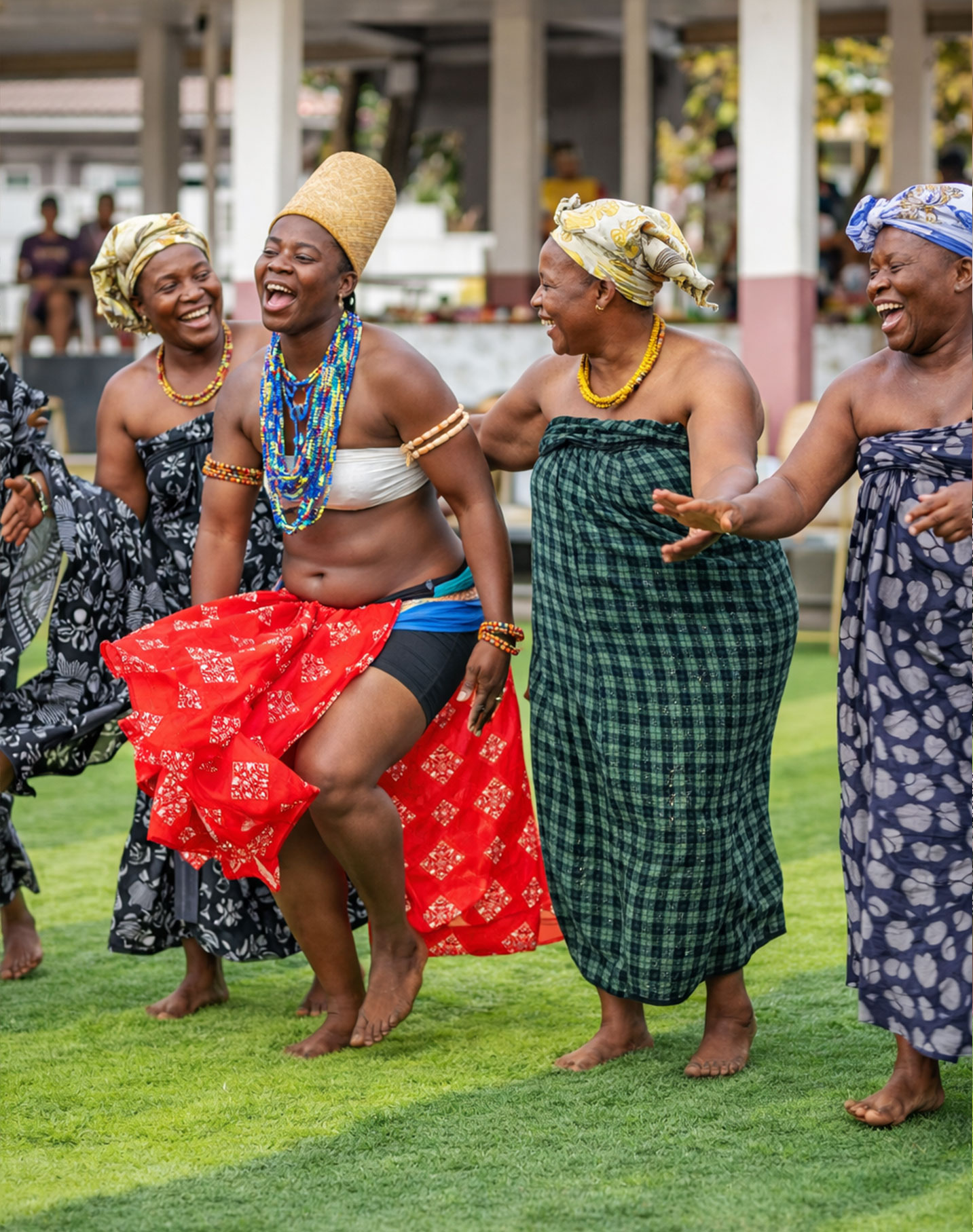
Cross-rhythms in 18th-19th century Ga music masterfully encoded migration tales against colonial influx, turning adaha bands and kple chants into living archives. Kolomashie bells locked 12/8 patterns against imported 4/4 marches, creating polyrhythmic puzzles only initiates decoded—recounting 1500s coastal arrivals, Kpeshi fusions, and 1660 Ayawaso flight.
Adaha patrols used this for coastal defense, brass amplifying bell codes signaling threats from Elmina slavers. Kple shrines deepened it, chants weaving proverbs over gome bass: “Waves brought us, forts cannot drown us.” Gome critiques targeted influx’s ills, like rum-induced quarrels, fostering unity.
Political use shone in rallies; rhythms rallied against land grabs. Oral persistence evaded bans, influencing Asante wars’ Ga support.
Today, these rhythms pulse in azonto and global afro-fusion. Workshops revive encoding for youth.
Discover polyrhythms via ensemble breakdowns [video:4 simulating ] and timeline diagrams. Migration route visuals.[