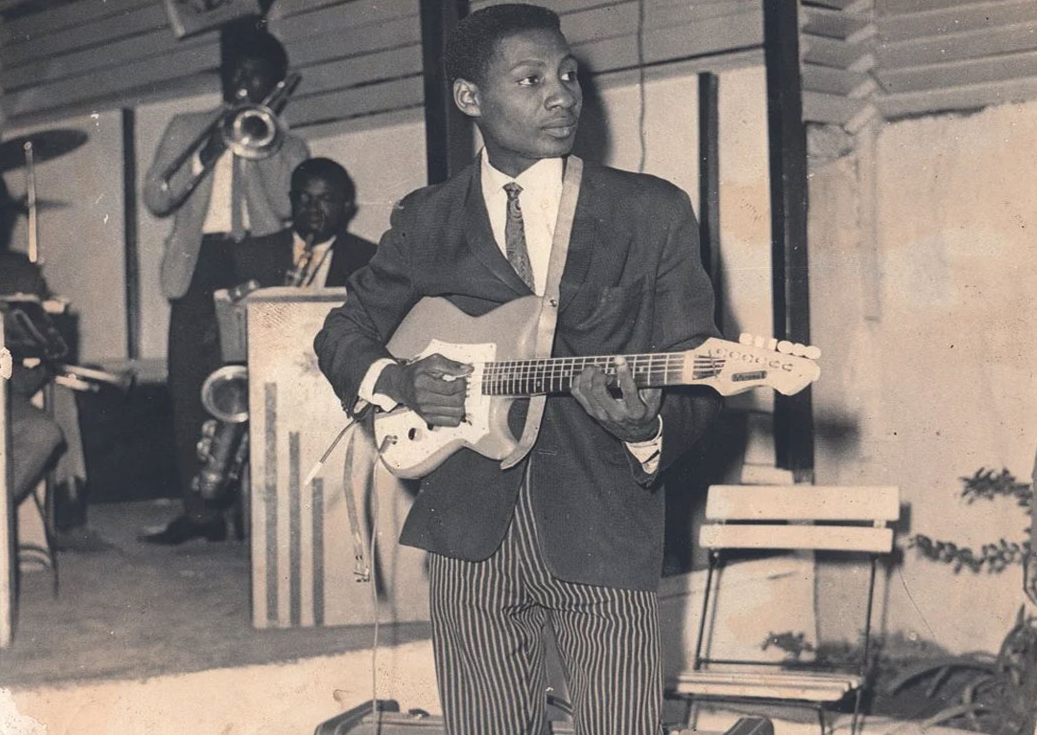
King Bruce, born Aaron Bruce in 1922 in Jamestown’s heart, stands beside E.T. Mensah as a highlife pillar, pioneering 1960s Accra’s dance-band scene with deep Ga roots. From childhood amid kolomashie street parades and adaha processions—his mother in traditional Ga ensembles—he mastered trumpet, playing clips for Mensah’s Tempos before leading Teacher Lamptey’s Accra Orchestra. His Black Beats fused gome timelines, brass regimental blasts, and twinned guitars into electrifying highlife, dominating Gamashie nightlife where clubs like Scrubbs and King’s Way pulsed with all-night jams.
Bruce’s hits—”Obaa Mansa,” “Ade Akye”—weaved Ga pidgin lyrics on urban pride and unity, like “Accra town no sleep, we beat our own drum,” echoing independence fervor. Black Beats elevated Gamashie sounds, their 1960s recordings spreading via Radio Ghana to West Africa, influencing Guinea’s Bembeya Jazz and Nigeria’s highlife offshoots. Unlike Mensah’s pharmacy polish, Bruce’s raw Jamestown edge drew fishermen and dockworkers, packing Ussher Fort dances with kple-inspired chants over syncopated brass.
Accra’s vibrancy peaked in this golden age: Osu streets alive with rival bands, trotro horns blaring highlife from car radios, weekend beach parties at Labadi blending gome slaps with electric vibes. Bruce managed Kaneshie’s Elephant Walk Studios in the 1970s, producing guitar-highlife hybrids that bridged to Osibisa’s global fusion. Related music like his “Sunshine of Love” showcased polyrhythmic guitar dialogues akin to Ga cross-rhythms, while covers of Mensah tunes added brass fireworks, fueling all-night rivalries with E.K. Nyame’s Akan Trio.
Politically, Bruce’s music celebrated Nkrumah’s CPP rallies, with Black Beats soundtracking unity marches. Post-1966 coups, they adapted to military dances, sustaining highlife amid economic shifts. His 1980s mentorship shaped young acts, ensuring Ga brass lived in palm-wine highlife. Modern Accra nods via Black Beats tributes at Chale Wote festivals, remixing tracks into hiplife.
See King Bruce trumpet solos in live clips [video:2 from ] and Black Beats Jamestown gigs. Vintage dancehall crowds.