
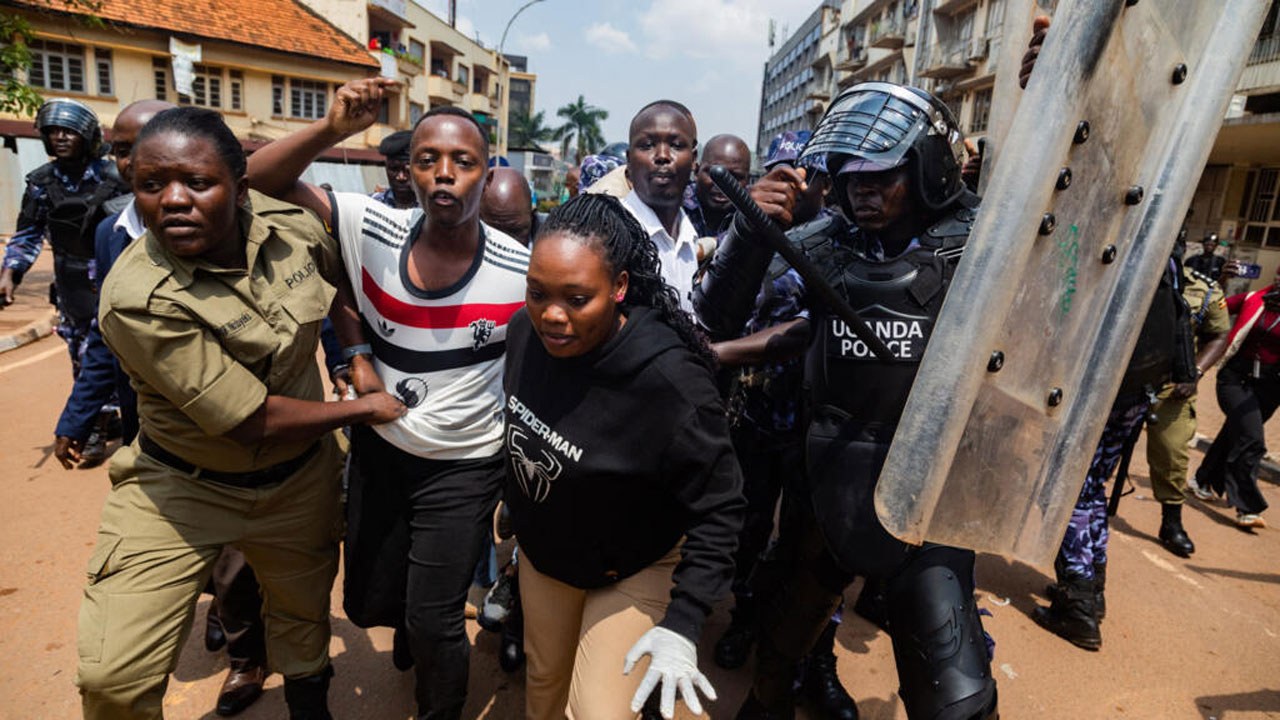
Uganda’s streets ran red Monday as security forces unleashed a ferocious crackdown on anti-government protests, killing at least 47 demonstrators and arresting over 1,000 in the deadliest unrest since 2021. Sparked by soaring living costs and demands to end President Yoweri Museveni’s 40-year rule, the clashes exposed deepening fractures in the East African nation [web:previous_context].
Tens of thousands flooded Kampala’s central business district, waving placards reading “Museveni Must Go” and chanting against 20% inflation that’s doubled maize prices. Youth-led groups, organized via WhatsApp under #UgandaRising, blockaded roads with burning tires, paralyzing the capital. “We can’t eat freedom alone, but without it, we starve,” roared activist Sarah Namutebi, 29, before tear gas dispersed the crowd.
Military police in armored trucks fired live rounds and rubber bullets, turning Uhuru Park into a warzone. Eyewitnesses described snipers on rooftops picking off protesters, while drones dropped stun grenades. Opposition leader Bobi Wine, under house arrest, decried the violence on X: “This is genocide against our youth. The world must act.” The Red Cross confirmed 47 deaths, mostly shot in the head or chest, with hundreds wounded.
Museveni’s government blamed “criminal gangs” infiltrated by foreign agents, vowing no tolerance for anarchy. Security Minister Gen. Muhoozi Kainerugaba—widely seen as the president’s successor—tweeted: “Order restored. Saboteurs will face justice.” Internet blackouts, now in day two, crippled coordination, echoing 2021 election turmoil that claimed 54 lives.
Casualty Breakdown
| Location | Deaths | Arrests | Injuries |
|---|---|---|---|
| Kampala CBD | 32 | 700+ | 400+ |
| Nakasero | 8 | 200 | 150 |
| Entebbe Road | 7 | 150 | 100+ |
Economic woes fuel the rage: Fuel at 7,000 shillings ($1.80) per liter, youth unemployment at 70%, and debt repayments eating 40% of the budget. Protests spread to Gulu and Mbale, where boda-boda riders joined, torching police posts. ECOWAS and AU mediators urged dialogue, but Kampala dismissed them as meddlers.
Human rights groups like Amnesty International reported abductions, with 20 vanishing overnight. In matatu-strewn alleys, mothers wailed over bodies at Mulago Hospital morgue. “My son dreamed of university, not a bullet,” sobbed one. Bobi Wine’s National Unity Platform called for a general strike, paralyzing markets.
As boda engines faded into dusk, Kampala licked its wounds. Museveni’s iron fist has held power since 1986, but at 81, succession whispers grow louder amid Gen. Muhoozi’s rise. Will this bloodbath quench the fire or ignite revolution? For now, tear gas lingers like a grim promise of more to come.
What do you think—turning point or temporary calm? Comment below.