

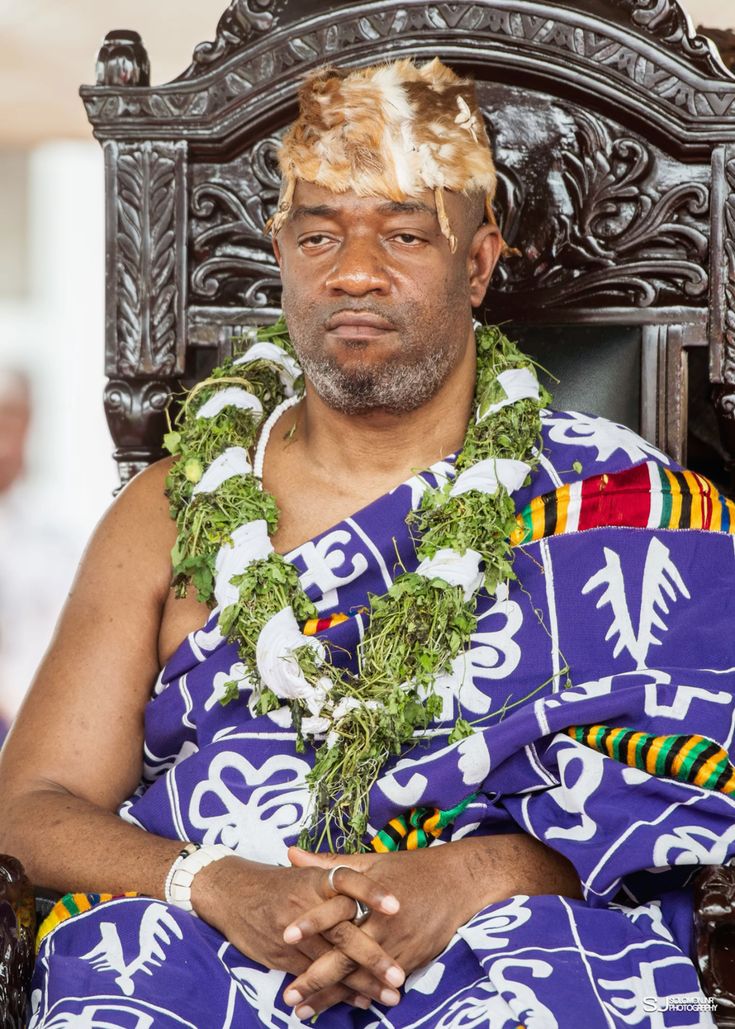
The Gã Mantse serves as the traditional king and paramount ruler of the Gã State, representing the cultural and spiritual identity of the Gã-Dangme people in Accra. The office embodies a deep historical lineage, acting as a custodian of Gã heritage, tradition, and the administration of the Gã Traditional Council.
Historical Lineage The Gã State, centered around Accra, traces its governance through a succession of powerful rulers, beginning with early priest-kings like Ayi Kushie and Mampong Okai. Since the 18th century, the stool has been associated with key ruling houses, including the Tackie dynasty, which has played a central role in Gã political history. These leaders historically managed the state’s affairs, oversaw the sacred traditions of the Homowo festival, and navigated the evolving socio-political landscape of the region. Leadership and Succession The legitimacy of the Gã Mantse remains a complex subject, often involving historical, legal, and traditional deliberations among kingmakers and the Gã Traditional Council. King Tackie Teiko Tsuru II (born Dr. Kelvin Nii Tackie Abia) was enstooled on May 9, 2020, by the Ga Paramount Stool Dzasetse and associated kingmakers, and he has actively engaged in contemporary leadership duties, including serving as President of the Ga Traditional Council. While legal disputes regarding the paramountcy have persisted for years, involving various court rulings and counter-judgments, the institution itself continues to function as a focal point for Gã cultural unity and regional governance.
The Ga Mantse serves as the paramount king and custodian of Ga-Adangbe heritage in Accra, Ghana.
He preserves cultural traditions, leads key festivals like Homowo, and acts as a spiritual link to ancestors for his people.wikipedia
Current Ga Mantse
King Tackie Teiko Tsuru II, also known privately as Dr. Kelvin Nii Tackie Abia, holds the title of Ga Mantse.
He is a successful entrepreneur who was enstooled through traditional processes by key kingmakers, including the Ga Paramount Stool Dzasetse Dr. Nii Tetteh Kwei II.wikipedia
Recent activities include leading 2025 Homowo celebrations, blessing local events in 2026, and recovering from an accident earlier this year.diamondfmonline+2
Role in Culture
The Ga Mantse is the central political and spiritual authority for the Ga-Adangbe people, centered in Accra’s quarters like Gamashie, Osu, La, Teshie, Nungua, and Tema.
He safeguards ancestral traditions, resolves disputes, and promotes unity amid urbanization.sankofalibrary+1
His prominence shines in the Homowo Festival, where he performs the inaugural sprinkling of kpokpoi—a sacred fermented corn dish—at the royal palace, enabling celebrations to spread.sankofalibrary
Purpose and Service
His core purpose is preserving Ga identity through rituals that “hoot at hunger,” commemorating ancestors’ famine survival during migration.
He serves by fostering education (e.g., Ga Education Fund), advocating respect for Ga custodianship of Accra, and leading pilgrimages like Ma’amɛn to honor past kings with libations and prayers.dailyguidenetwork+2
As a servant leader, he builds community ties, supports development, and engages in inter-ethnic unity, such as with the Asantehene.modernghana+1
Lineage and Selection
The Ga Mantse traces to ancient lines like the Tunnmaa Dynasty, starting with Nii Ayi Kushi around 1424.facebook
Lineage draws from royal houses such as Teiko Tsuru We, Tackie Kome We, and Amugi We, with King Tackie Teiko Tsuru II linked as a great-grandson of Tackie Tawiah I via patrilineal and matrilineal descent.ghanaweb
Selection is not strictly blood but by election: Kingmakers (Dzasefoi) from the ruling house choose a candidate, prepare the stool house, perform cleansings, and enstool via rituals like sitting on the Black Stool.dailyguidenetwork+2
Homowo Festival Centrality
Homowo, meaning “hooting at hunger,” is a harvest ritual cycle from millet planting to kpokpoi feasts, banning noise for spiritual growth.akwaaba
The Ga Mantse and Wulomei priests coordinate it, ensuring ancestral feeding precedes communal eating for blessings and solidarity.sankofalibrary
It reinforces heritage across Ga towns, with songs critiquing leaders, blending spirituality, social accountability, and economy.akwaaba

